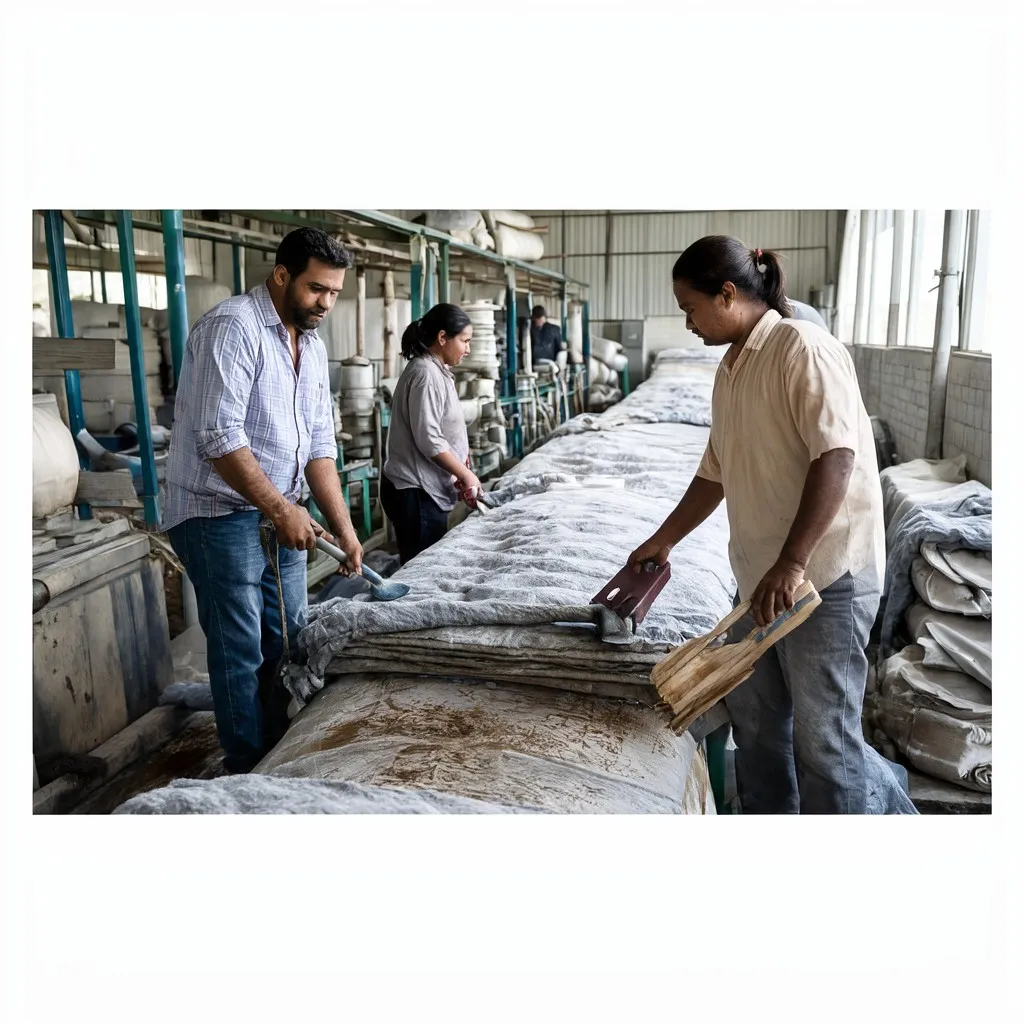
CVC fabric is a cotton-polyester blend where cotton is the majority fiber, the "chief value cotton" in the name. That blend is what makes the CVC fabric dyeing process different from dyeing a single fiber: the polyester portion needs a high-temperature disperse dye stage, held around 130-135°C, before the cotton portion takes its own dyes at a lower, controlled temperature. Most mills run both stages in one bath, moving the fabric through a single sequence of chemical additions, temperature ramps and shade checks. If you are still deciding between the two blend types, Perception Impex explains the difference in PC vs CVC fabric and yarn. Here is how the dyeing sequence works, step by step, and where the newer sustainable options fit in.
Key takeaways
- CVC is a chief value cotton blend, so one dye bath has to serve two fibers: the polyester part is dyed first at 130-135°C, then the cotton part with its own chemicals and temperature.
- The standard one-bath method uses disperse dyes for polyester and reactive dyes for cotton, dosed together at 50°C.
- Two long holds carry the color: 30-40 minutes at 130°C for polyester, then soda ash dosing and 30-40 minutes at 82°C to fix cotton.
- Shade is checked at 70°C twice, once for the polyester portion and once for the cotton portion after soda dosing.
- After dyeing, the fabric gets an acetic acid wash at 60°C and a 95°C soap-off before unloading.
- New to the fabric itself? Start with What Is CVC fabric, then compare blends in PC vs CVC.
What makes dyeing CVC different from pure cotton or pure polyester
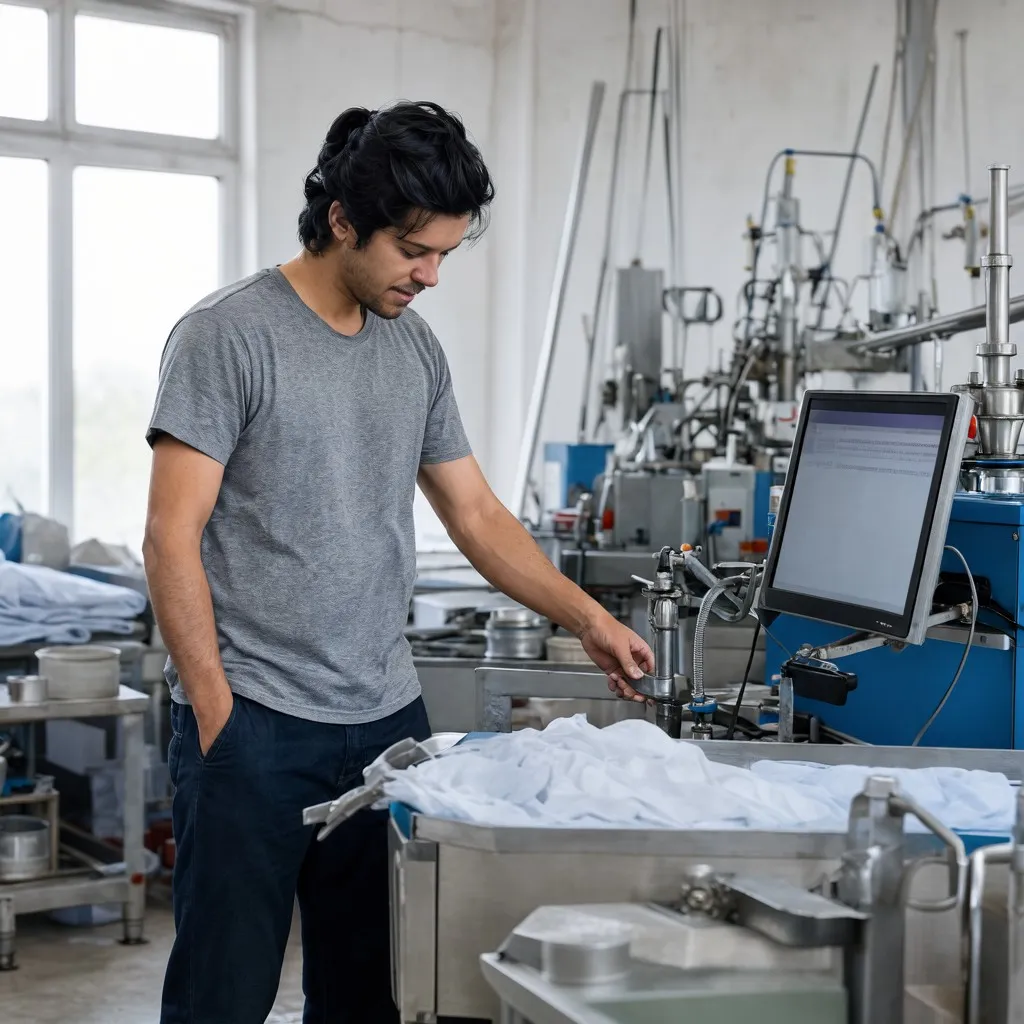
Dyeing a pure fiber is a single-chemistry job. Cotton takes reactive dyes at moderate temperatures; polyester needs disperse dyes and heat high enough to swell the fiber so dye molecules can move inside it. CVC has both fibers in one fabric, so both chemistries have to run without interfering with each other.
The industry's answer is a one-bath method: both dye classes go into the same machine, and the temperature programme does the separating. The polyester dyeing happens first at high temperature, in the 130-135°C range, and the cotton dyeing follows afterwards with its required chemicals and a lower controlled temperature. This saves water, time and energy compared with dyeing the two fibers separately, but it demands precise dosing and temperature control, which is why the sequence below is so specific. For a closer look at the fiber blend itself, see What Is CVC fabric.
The one-bath CVC fabric dyeing process, step by step
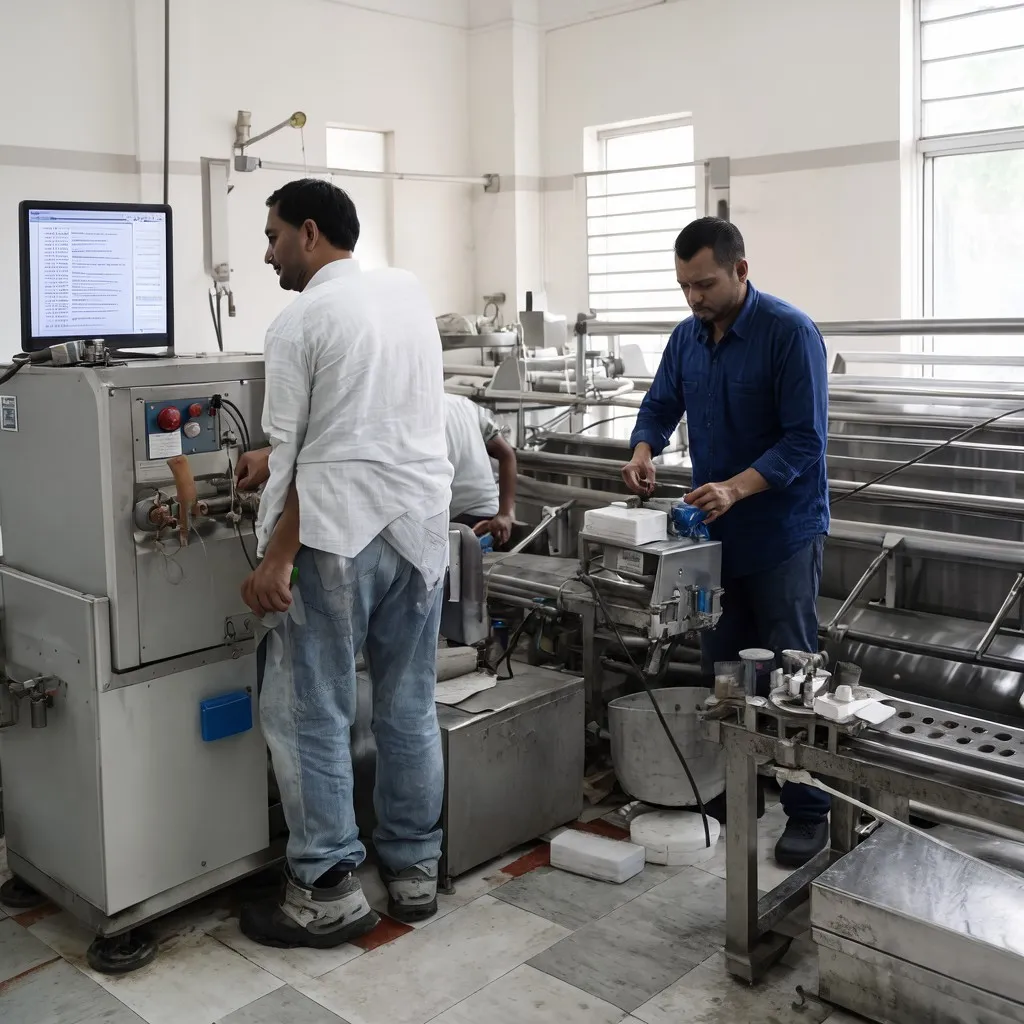
The sequence below follows the standard one-bath disperse and reactive dyeing method for CVC.
- Fill the machine bath with water to the required level.
- Add detergent, sequestering agent, anti-creasing agent and dispersing agent, then circulate the fabric for 5 minutes at 50°C.
- Add acetic acid and circulate for 5 minutes at 50°C.
- Add Glauber's salt and circulate for 5 minutes at 50°C.
- Check the pH of the dye bath.
- Add the polyester dye solution by linear dosing and circulate for 10 minutes at 50°C.
- Add the cotton dye solution by linear dosing and circulate for 10 minutes at 50°C.
- Circulate the fabric and raise the temperature to 130°C.
- Keep circulating at a constant 130°C for 30-40 minutes so the disperse dye exhausts into the polyester.
- Cool the bath to 70°C and check the polyester shade against the approved standard.
- Raise the temperature to 82°C and circulate for 30-40 minutes.
- Add soda ash by curve dosing and keep circulating for 30-40 minutes at 82°C so the reactive dye fixes on the cotton.
- Cool back to 70°C and check the cotton shade against the approved standard.
The two dosing styles matter. Dyes go in by linear dosing, a steady controlled addition that keeps the bath level and avoids unlevel strikes on the blend. Soda ash goes in by curve dosing, a gradual pH rise that fixes reactive dye on cotton slowly enough to prevent patchy color. If you are choosing between this process and dyeing a polyester-heavy blend, see PC vs CVC fabric and yarn.
After the dye bath: rinsing, neutralising and soaping
Dyeing does not end at the shade check. The fabric still carries unfixed dye, salt and alkali that would come off in later washing.
The after-treatment sequence runs like this: rinse and drain the fabric, add acetic acid and circulate for 10 minutes at 60°C to neutralise the residual alkali, then drain. Next, add soaping chemical and circulate for 10 minutes at 95°C; this hot soap-off removes unfixed dye from the fiber surface before the fabric is drained. The fabric then gets a final 10-minute circulation at 70°C, a last drain, and the machine unloads.
Checking shade and fastness during the run
Two in-process shade checks keep a CVC dyeing on standard. The polyester shade is checked at 70°C, after the high-temperature hold and before the cotton stage begins. If the polyester part is off at this point, correcting it before soda dosing is far cheaper than a re-dye. The cotton shade is checked at 70°C again, after the soda ash treatment.
What counts as a good result depends on the dye system. For a conventional run, the shade must match the approved lab-dip standard on both fibers at once, which is the hard part of blends: a fiber that dyes too dark or too light pulls the overall shade off even when each dye bath was dosed correctly. Fastness is measured after the fact; in one published natural-dye study on CVC, dyed samples rated 4-5 for washing, perspiration and dry rubbing, 4 for wet rubbing and 4 for light exposure. The blend you dye matters for these results too, which is why PC vs CVC fabric and yarn is worth reading before ordering.
Sustainable alternatives: natural dyes on CVC
The conventional process relies on synthetic disperse and reactive dyes, plus salt, alkali and auxiliary chemicals. Research into greener routes is active, and one recent peer-reviewed study tested pomegranate peel extract (Punica granatum), a tannin-rich natural dye, on cotton, polyester and CVC blends using the exhaust method at 90°C for 60 minutes.
The results were mixed but real. The CVC fabric reached a color strength (K/S) of 2.1 at 420 nm, a moderate shade depth, and FTIR analysis showed the O-H stretching band shifting from 3293.82 to 3305 cm⁻¹, evidence of hydrogen bonding between the dye's phenolic groups and the fiber. Fastness ratings of 4-5 for washing, perspiration and dry rubbing suggest the approach is viable for applications that accept earthier, moderate-depth shades. Buyers who need deep or bright shades will still get them from the conventional one-bath process; natural dyeing currently suits narrower, sustainability-driven product lines. For background on the fabric these methods target, see What Is CVC fabric.
Common questions about the CVC fabric dyeing process
Q: What temperature is CVC fabric dyed at?
A: The polyester portion is dyed at 130-135°C, and after that the cotton portion is dyed at lower controlled temperatures, with the reactive dye fixation stage held at 82°C.
Q: Which dyes are used in the one-bath CVC dyeing method?
A: Disperse dyes color the polyester and reactive dyes color the cotton, both dosed into a single bath at 50°C, with the temperature programme separating the two stages.
Q: Why is soda ash added by curve dosing instead of all at once?
A: Curve dosing raises the pH gradually over 30-40 minutes at 82°C, letting the reactive dye fix evenly on the cotton instead of striking in patches.
Q: Can CVC fabric be dyed with natural dyes?
A: Yes, in trials: pomegranate peel extract applied by exhaust method at 90°C for 60 minutes gave CVC a moderate shade depth (K/S 2.1 at 420 nm) and washing fastness of 4-5.
Q: What happens if the 95°C soap-off is skipped after dyeing?
A: The fabric keeps unfixed dye on its surface, so the shade bleeds and fastness drops; the soap-off at 95°C for 10 minutes is the step that removes it.
Choosing CVC fabric for your next order
Understanding how CVC is dyed makes it easier to judge a supplier's lab dips, fastness reports and lead times. Two Perception Impex guides go deeper on the fiber side of the decision: the difference between PC and CVC fabric and yarn covers which blend suits which end use, and What Is CVC fabric explains the chief value cotton blend itself.